Hi everyone! As the Gender Identity Disorder conversation continues, I came across this and wanted to share... I touch on this topic every semester, and I must say, I am so proud of my students for having mature, respectful conversations about this controversial, complex topic. There are no easy answers.
Check out this story about transgendered teen Gavin Grimm:
http://channel.nationalgeographic.com/gender-revolution-a-journey-with-katie-couric/videos/gavin-grimms-story-extended/
Trying to put my personal beliefs on the topic aside for a moment, a few things really stuck with me about this clip:
When I saw people emphatically cheering at the school board meeting, it made me very uneasy. I'm not sure 'cheering' is a response we should have on this topic. A kid, who is in a very tough situation, is hurting. A school is divided. It isn't a football game. This is a complex decision with many ramifications. When Gavin got up at the school board meeting: WOW! Most kids shudder at having to do a speech in communications class. This kid spoke up in a room, where clearly there were people who didn't understand/agree with him and were quite vocal about that. No matter where your opinion falls on this issue, I think we can all give him props for doing that. That would have been difficult for me to do, and he was 15-16 years old at the time.
To tie this issue back to another issue we cover is psychology when discussion research is the idea of an operational definition. As one gentleman referred to in the video, what exactly do we base bathroom selection on?
If bathroom selection is to be decided on biological sex, then Gavin would use the women's restroom (biologically, Gavin is a female - even if gender reassignments surgery occurred, the DNA would still show an XY chromosome). To complicate the article even more, there are intersexed individuals - people born with both male and female sexual organs.
We call it a women's restroom, even though woman is a gender term, and remember that is different than biological sex. That, again, confuses the conversation even more. A lot of this confusion is due to the fact that we've always used the words male/man and female/woman interchangeably, when in fact, biological sex and gender are completely separate dynamics.
As a refresher, check out this quick rundown of the difference of gender, sex and sexual orientation: https://youtu.be/xXAoG8vAyzI


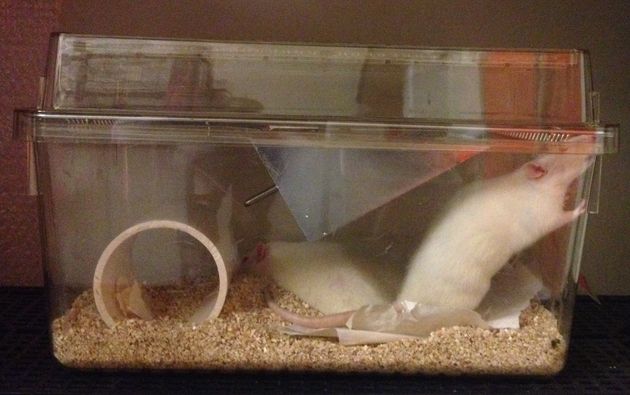

New York University’s medical school has quietly shut down eight studies at its prominent psychiatric research center and parted ways with a top researcher after discovering a series of violations in a study of an experimental, mind-altering drug.
A subsequent federal investigation found lax oversight of study participants, most of whom had serious mental issues. The Food and Drug Administration investigators also found that records had been falsified and researchers had failed to keep accurate case histories.
In one of the shuttered studies, people with a diagnosis of post-traumatic stress caused by childhood abuse took a relatively untested drug intended to mimic the effects of marijuana, to see if it relieved symptoms.
“I think their intent was good, and they were considerate to me,” said one of those subjects, Diane Ruffcorn, 40, of Seattle, who said she was sexually abused as a child. “But what concerned me, I was given this drug, and all these tests, and then it was goodbye, I was on my own. There was no follow-up.”
It’s a critical time for two important but still controversial areas of psychiatry: the search for a blood test or other biological sign of post-traumatic stress disorder, which has so far come up empty, and the use of recreational drugs like ecstasy and marijuana to treat it.
At least one trial of marijuana, and one using ecstasy, are in the works for traumatized veterans, and some psychiatrists and many patients see this work as having enormous promise to reshape and improve treatment for trauma. But obtaining approval to use the drugs in experiments is still politically sensitive. Doctors who have done studies with these drugs say that their uncertain effects on traumatic memory make close supervision during treatment essential.
The New York Times pieced together details of the research and the investigation through documents, letters and emails, as well as interviews with a participant and several researchers familiar with the project.